
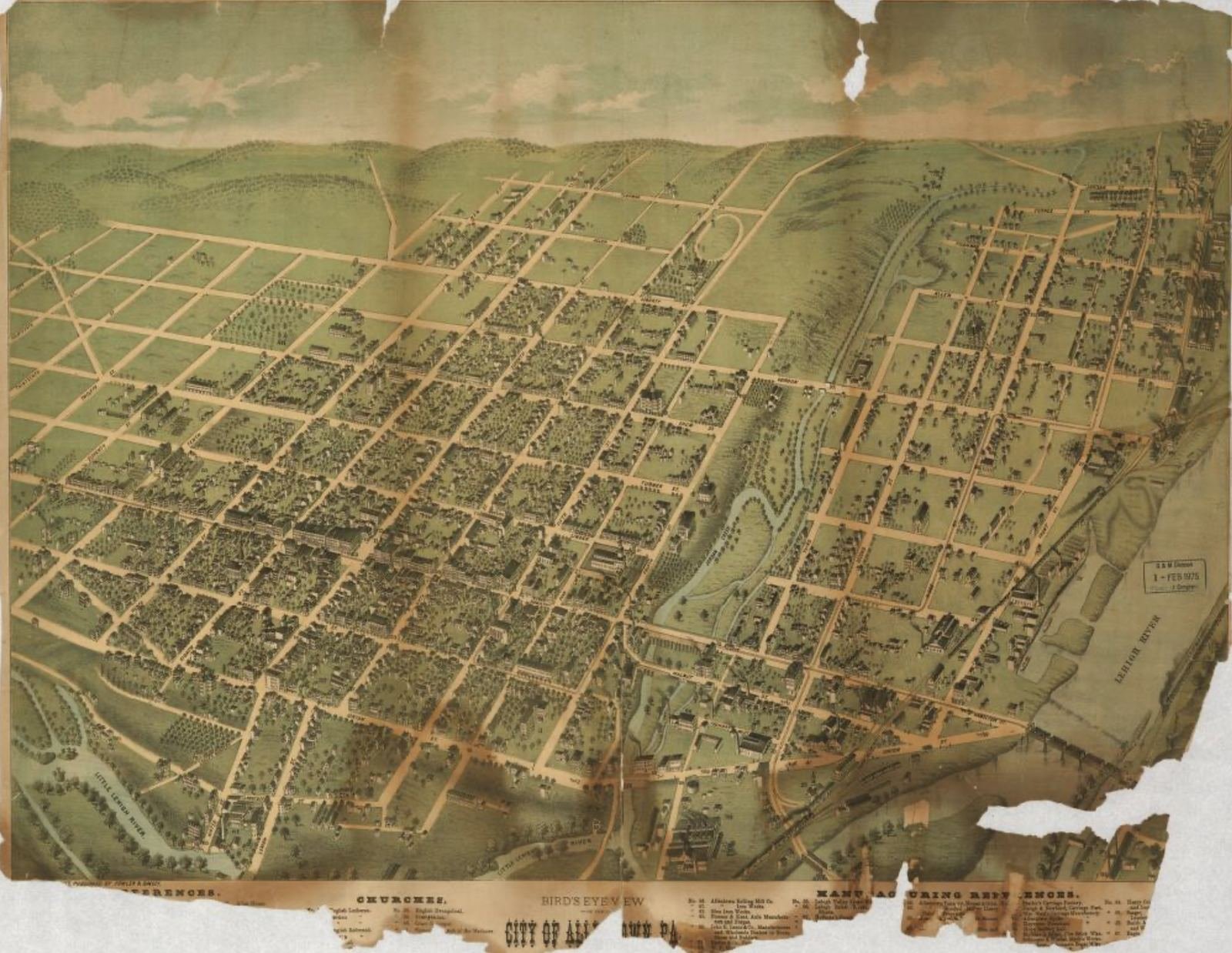
Allentown in 1879, still laid out on William Allen's 1762 grid. Bird's Eye View of the City of Allentown, Pa., 1879, drawn by O. H. Bailey. Library of Congress, Geography and Map Division (item 78694441). Public domain, free to use and reuse.
William Allen's plan for his new town, drawn in 1762, called for 42 blocks and 756 lots. Most of the lots were 60 feet wide and 230 feet deep. Each one is a small, strict rectangle, and the pattern is still there. Walk the streets of Old Allentown in November, after the leaves are down and the trees stop hiding the fronts of the houses, and you are walking across Allen's rectangles, only now they are filled in with brick, porches and well over a century of paint.
Allen was a Philadelphia shipping merchant and a former mayor of that city. He called his town Northampton Towne, a name that stayed on paper but never caught on. People said Allen's Town instead, which drifted into Allenstown, and the place was officially renamed Allentown in 1838. Old Allentown sits within that original plan, but it filled in as the city grew north and west. Lehigh Valley Public Media notes that the neighborhood began developing in the 1850s, which is why so much of what we see today is mid- and late-19th-century work. The City lists Federal, Italianate, Eastlake and Victorian styles among them.
A family on the signs
Allen didn't leave the names to chance. According to the usual account of the plan, he named streets for his own children. Margaret became what is now 5th Street, William is now 6th, James is now 8th, Ann is now 9th, and John is now Walnut. His own name went on the main street, Allen Street, which is now 7th. If you live on 8th Street, then, you live on a street first named for one of Allen's sons. That son, James, is the one who built Trout Hall, the stone house on Walnut Street, between 1768 and 1770. An entry in James Allen's diary dated November 6, 1770, records the name of the house.
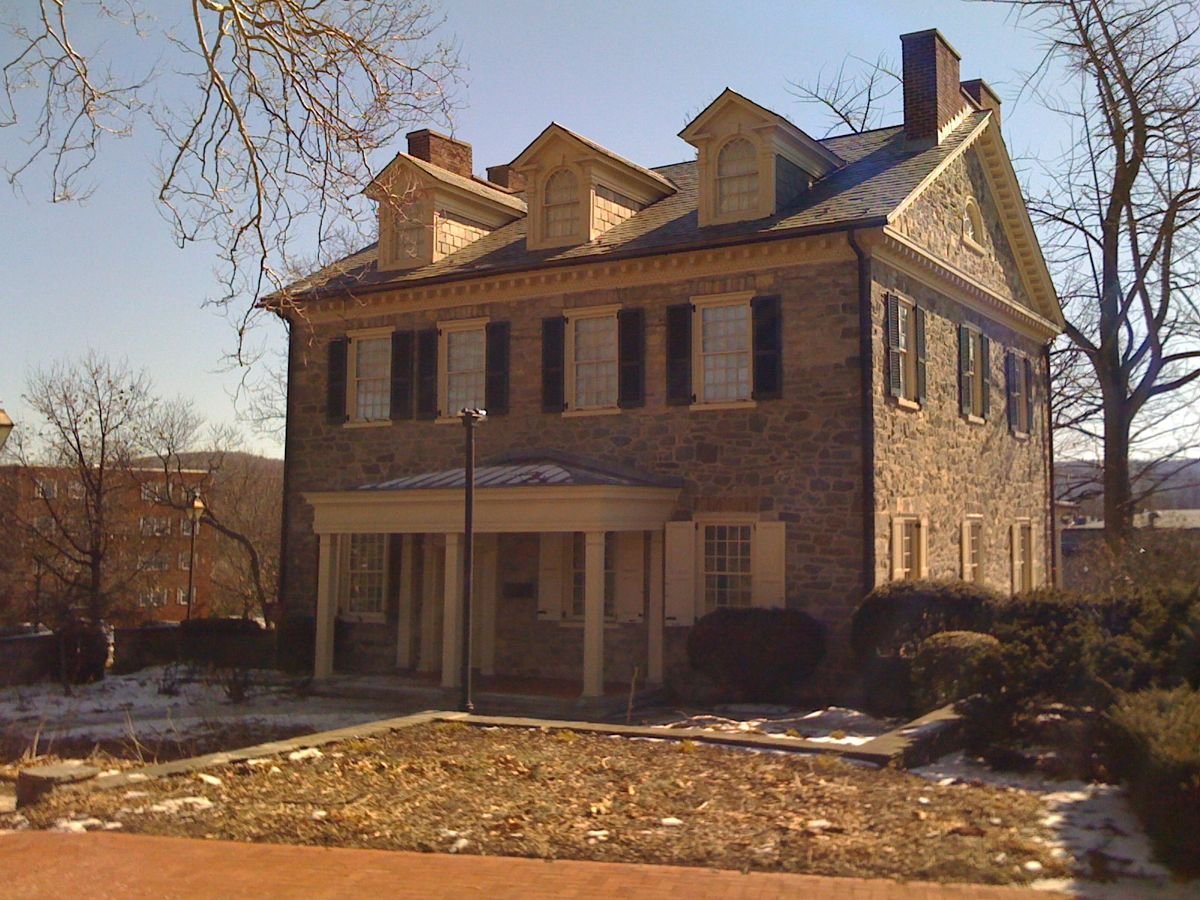
Trout Hall, built by William Allen's son James between 1768 and 1770. Photo by Alphageekpa, February 2008. Licensed under CC BY-SA 3.0, via Wikimedia Commons.
The rest of the signs honor the people around Allen. Hamilton Street is named for James Hamilton, who was mayor of Philadelphia in 1745 and 1746 and twice served as deputy governor of the Province of Pennsylvania. Turner Street honors Joseph Turner, the Philadelphia iron manufacturer and Allen's business partner, who received the land in a 1732 deed from Thomas Penn. Allen bought 5,000 acres of it in 1735. Chew Street is for Benjamin Chew, and Gordon Street for Patrick Gordon.
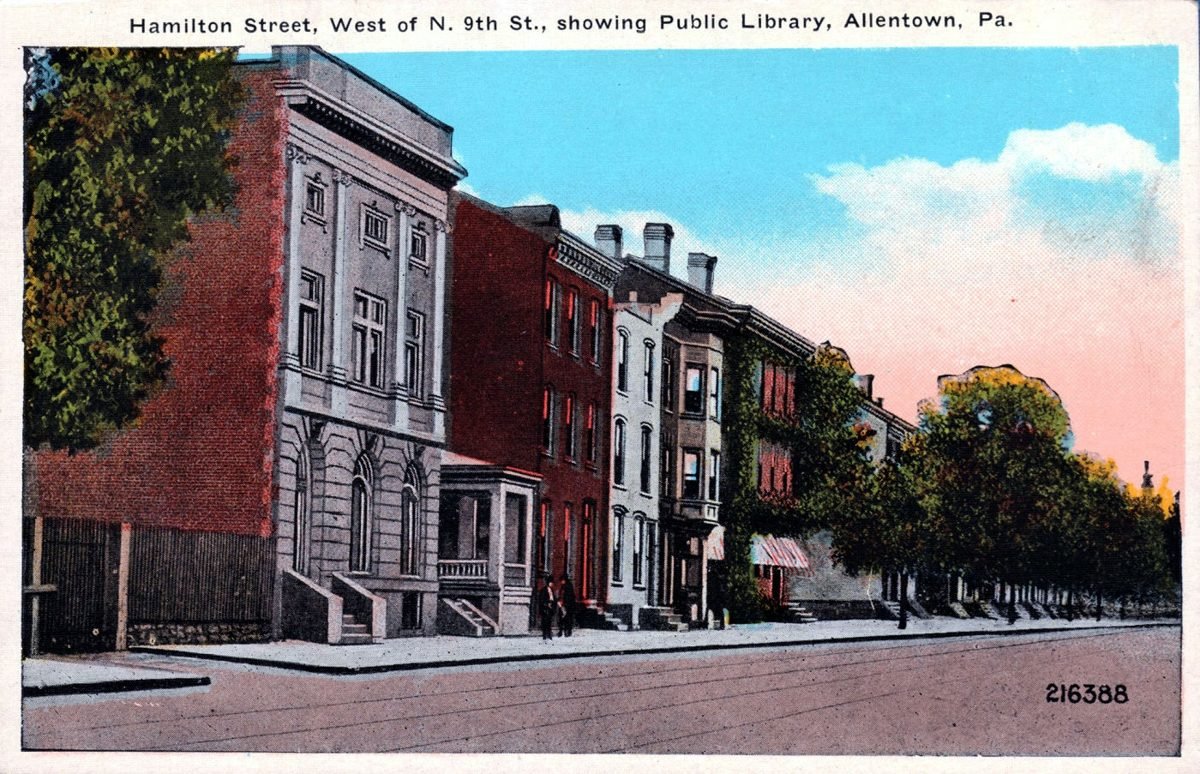
Hamilton Street west of 9th Street, about 1915, from a postcard that shows the public library. Photo postcard, about 1915. Photographer unknown. Public domain in the United States, via Wikimedia Commons.
I find it a little strange, and I mean that kindly, that a neighborhood built mostly by 19th-century working families carries the names of an 18th-century merchant's relatives, friends and business contacts. The grid records who had the pen in 1762. The houses record who came afterward and actually did the building. Both are on the block with you at once, and it is worth knowing which is which.
Becoming a district
The City established the Old Allentown Historic District on September 6, 1978, by Ordinance 12314, and the Pennsylvania Historical and Museum Commission certified it on September 26 of that year. It was the city's first historic district. Two years before that, in 1976, the Old Allentown Preservation Association was founded, and it has been caring for the neighborhood's architecture and its sense of community ever since.
Today, substantial changes to a building's exterior that are visible from the street go before the city's Historical Architecture Review Board. In 2025 the City finished a project that photographed and cataloged the exterior features of more than 2,000 properties across Old Allentown, Old Fairgrounds and West Park, replacing decades-old paper files with a digital database. The results were unveiled at City Hall on October 21, 2025. The board's chairman, A.J. Knee, who lives in Old Allentown, told Lehigh Valley Public Media that he is especially drawn to the district's diversity of rowhouses and porch styles. He pointed to the 1000 block of Turner Street and the 300 block of 8th Street as two places where that variety is easy to see.
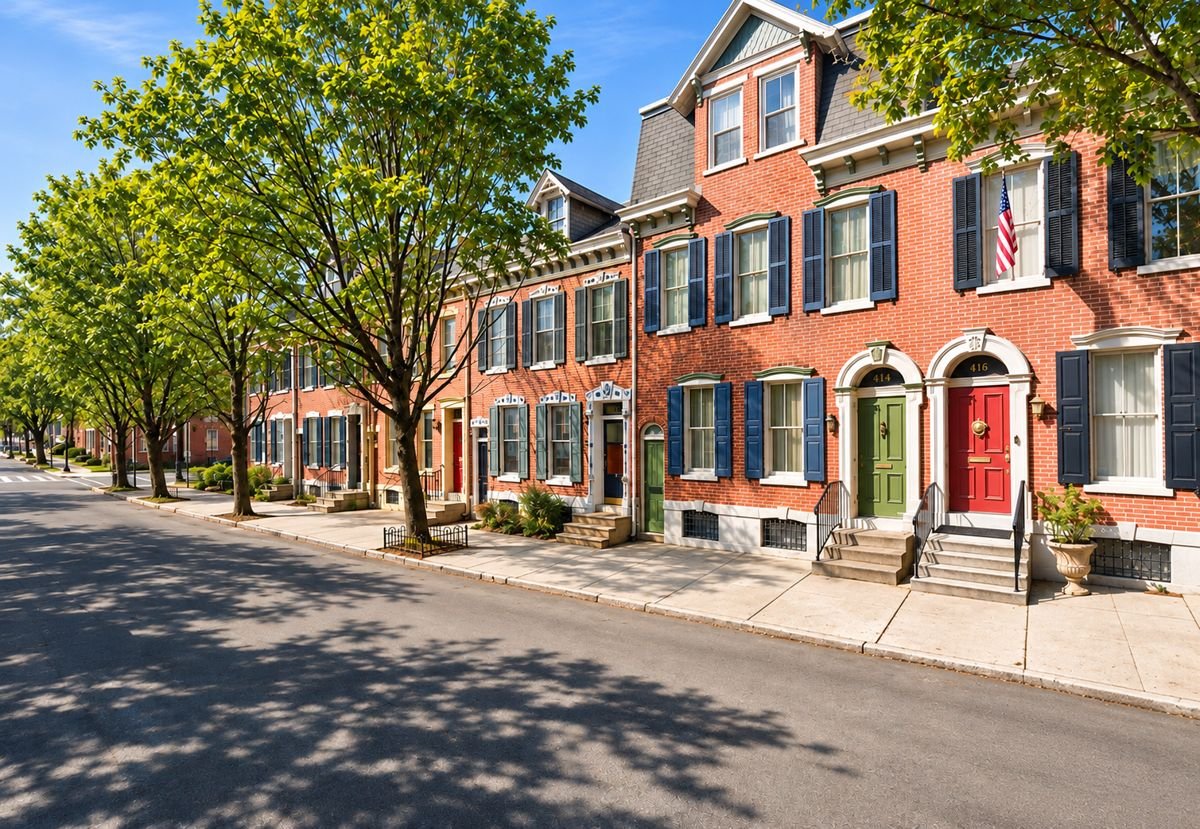
Rowhouses on the 400 block of 8th Street. AI-generated illustration by Angie Brown, not a photograph.
A November walk
For this month, here is a small thing to try. Pick a block, perhaps one of those two, and start at one end of it. Read the street sign first. Then count your steps along the fronts, and note that a 60-foot lot is roughly two dozen ordinary steps. See how many of the houses fill a whole lot and how many share one, where the porches step forward or back, and where a gap between buildings might mark the line of one of Allen's original rectangles. With the leaves down you can see the cornices, the window heads and the roof lines that summer usually hides.
Then look at who lives behind them: the neighbors who shovel the walk next to yours, bring in each other's packages and keep the porch lights on after dark. The street names were set in 1762, but the neighborhood is kept up by whoever is here now, and November, with its short days and its holiday gatherings, is a good time to say thank you for that.
Sources
City of Allentown, Office of Historic Preservation
Lehigh Valley Public Media, "Allentown historic district records go digital: you can feel the history with every block" (October 22, 2025)
Wikipedia, "Allentown, Pennsylvania" and "Hamilton Street"
National Register of Historic Places, Trout Hall (reference 78002425), and SAH Archipedia
Penn State University Libraries, "Allen's Town and Trout Hall"
Lehigh County, "The Old Allentown Preservation Association"